Our work
IFAGE works in communities - with the leaders, families, and young people who shape them.
Everything we do is connected.
How we think about change
Inequality is stubborn.
It is held in place by what people believe, what they are able to do, what support exists around them, and what the systems in their lives allow or prevent. Pull on one thread and the others hold it in place.
IFAGE works on all of those threads - in the same communities, at the same time. That is what makes the difference.
Want the full picture? The 2026-2031 strategic plan is available to download.
Download the Strategic Plan
Download the approved IFAGE Strategic Plan for 2026-2031 directly from the website.
Download the Strategic PlanHow we work
Four connected models.
Model 01
Positive Masculinity & Faith Leader Engagement
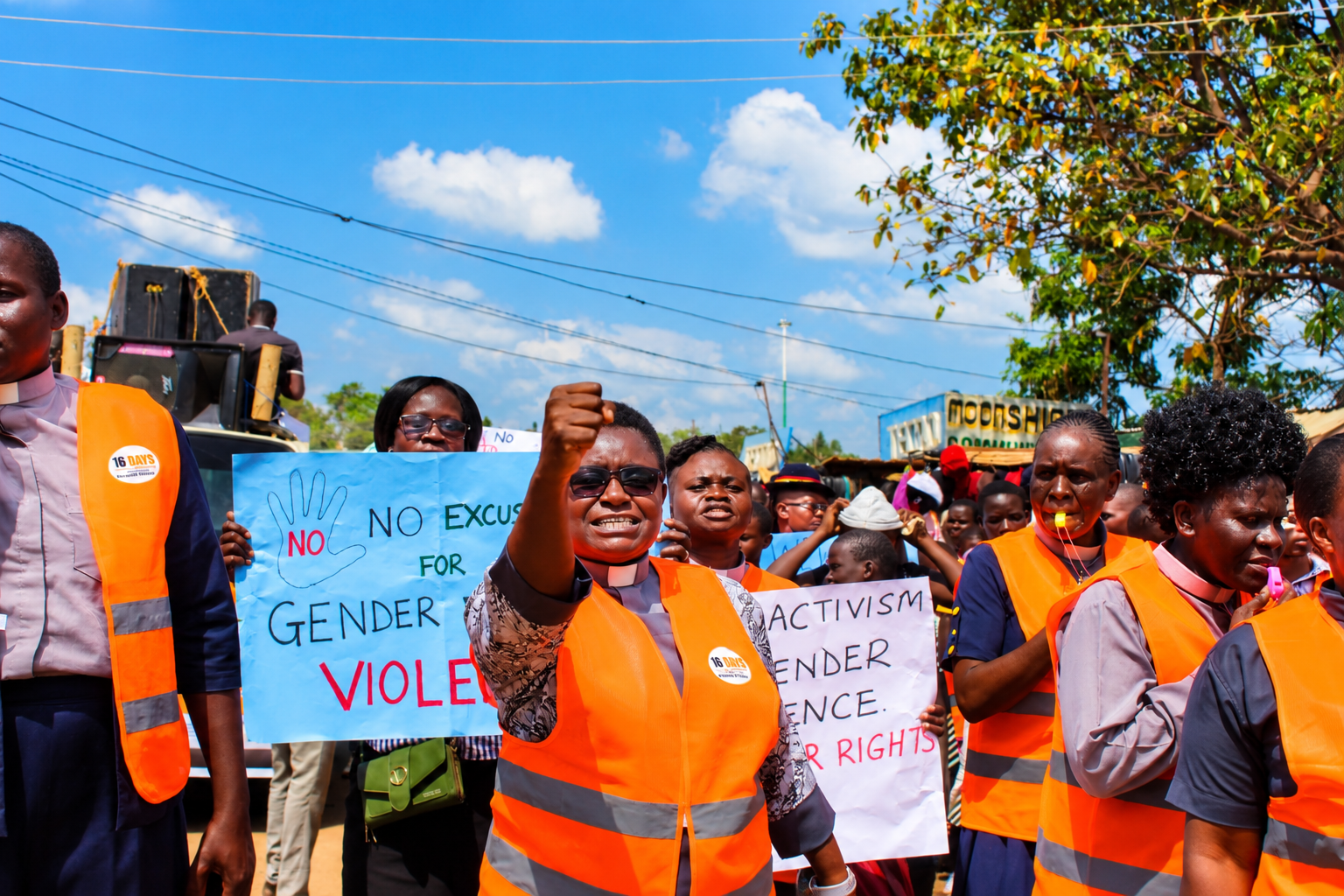
IFAGE's Positive Masculinity curriculum has been built over a decade of work alongside men and boys in communities across East and Central Africa. It creates space for something that does not happen enough - honest conversation about gender, power, and what it means to lead with integrity. The men who go through it do not just leave with new information. They go back to their families, their congregations, and their communities and lead differently.
Read MoreModel 02
Shaping the Next Generation
The young person in a classroom today is the parent, the community leader, and the decision-maker of tomorrow. If we can reach them now - before harmful norms have fully settled - we are changing what the next generation considers normal. IFAGE's Youth Running Club brings young men and women together for the conversations that rarely happen anywhere else.
Read MoreModel 03
Livelihood, Economic Empowerment & Health
In Bondo, Rarieda, and Ugunja, 440 women across 14 savings groups are saving together, lending to one another, and growing businesses from the ground up. Inside every group are trained sexual and reproductive health champions and a linked community paralegal. Economic strength, health knowledge, and access to justice - woven together, because in these communities they always were.
Read MoreModel 04
Survivor Support & Community Justice
Survivors to Voices is IFAGE's survivor recovery model - bringing together psychosocial support, legal referrals, economic recovery, and safe spaces for storytelling. Trained community paralegals bridge the gap where formal legal systems are distant or inaccessible, walking alongside survivors through processes no one should face alone. And faith institutions - often the first place a survivor turns - are equipped to recognise harm, respond with dignity, and connect people to the support they need.
Read MoreModel 01
Positive Masculinity & Faith Leader Engagement.
The Positive Masculinity Curriculum
IFAGE's Positive Masculinity curriculum has been built over a decade of work alongside men and boys in communities across East and Central Africa. It creates space for something that does not happen enough - honest conversation about gender, power, and what it means to lead with integrity.
The men who go through it do not just leave with new information. They go back to their families, their congregations, and their communities and lead differently. That ripple is the point.
In Kenya, the curriculum is currently being delivered through the Restoring Balance project - a partnership with Episcopal Relief & Development - engaging faith leaders and men across Mbita, Bondo, Rarieda, and Ugunja.
The curriculum covers
- Where harmful norms come from and how they are held in place
- Gender as a question of dignity, not just culture
- What it looks like when men choose to advocate differently
- How young men can build relationships grounded in equality and respect
Model 02
Shaping the Next Generation.
Reach young people before harmful norms settle.
The young person in a classroom today is the parent, community leader, and decision-maker of tomorrow. If we can reach them now - before harmful norms have fully settled - we are changing what the next generation considers normal.
Conversation opened in class and outside.
In schools and faith institutions across Bondo, Rarieda, and Ugunja, IFAGE's Youth Running Club brings together adolescents and young people for conversations that rarely happen in structured settings - about gender, relationships, consent, and respect - while integrating sports and physical activities. Coaches drawn from the school and community lead the sessions using the YRC curriculum.
Model 03
Livelihood, Economic Empowerment & Health.
Women saving together
In Bondo, Rarieda, and Ugunja, 440 women across 14 savings groups are building something together. They meet regularly, pool their savings, issue loans to one another, and grow businesses from the ground up.
Skills and resilience
Business planning, financial literacy, market access, and record-keeping are part of every group's journey. So are agricultural, education, and emergency booster funds - because one setback should not erase months of progress.
Health and justice woven in
Inside every group are trained sexual and reproductive health champions and every group is linked to a trained community paralegal. Economic strength, health knowledge, and access to justice are woven together.
Model 04
Survivor Support & Community Justice.
Survivors to Voices
Survivors to Voices is IFAGE's survivor recovery model. It brings together psychosocial support, legal referrals, economic recovery pathways, and safe spaces for storytelling - built on the belief that a survivor deserves more than a crisis response. They deserve a path back.
Community Paralegals
Where formal legal systems are distant or inaccessible, trained community paralegals bridge the gap. They document cases, make referrals, and walk alongside survivors through processes that no one should have to navigate alone.
Faith First Responders
Faith institutions are often the first place a survivor turns - or the place that looks away. IFAGE works with congregations and faith leaders to build the awareness, skills, and moral courage to recognise harm, respond with dignity, and connect survivors to the support they need.